
Introduction
In today’s digital era, biometric security has become a cornerstone of personal device protection. From unlocking your smartphone with a fingerprint to using facial recognition to access secure apps, biometrics are everywhere. But how exactly does biometric security work? Why is it considered more secure than passwords? And what are the underlying technologies that make it possible?
This deep dive will explain biometric security in clear, expert terms — what it is, how it operates in modern devices, its benefits, limitations, and future trends. Whether you’re a tech enthusiast, a business owner, or simply curious about how your devices stay safe, this article is for you.
What Is Biometric Security?
Biometric security refers to authentication systems that use measurable physical or behavioral characteristics unique to an individual to verify identity. Instead of remembering a password, PIN, or pattern, your device checks something inherent to you.
Types of Biometrics
Physical Biometrics
Physical biometric traits are based on body features. Common examples include:
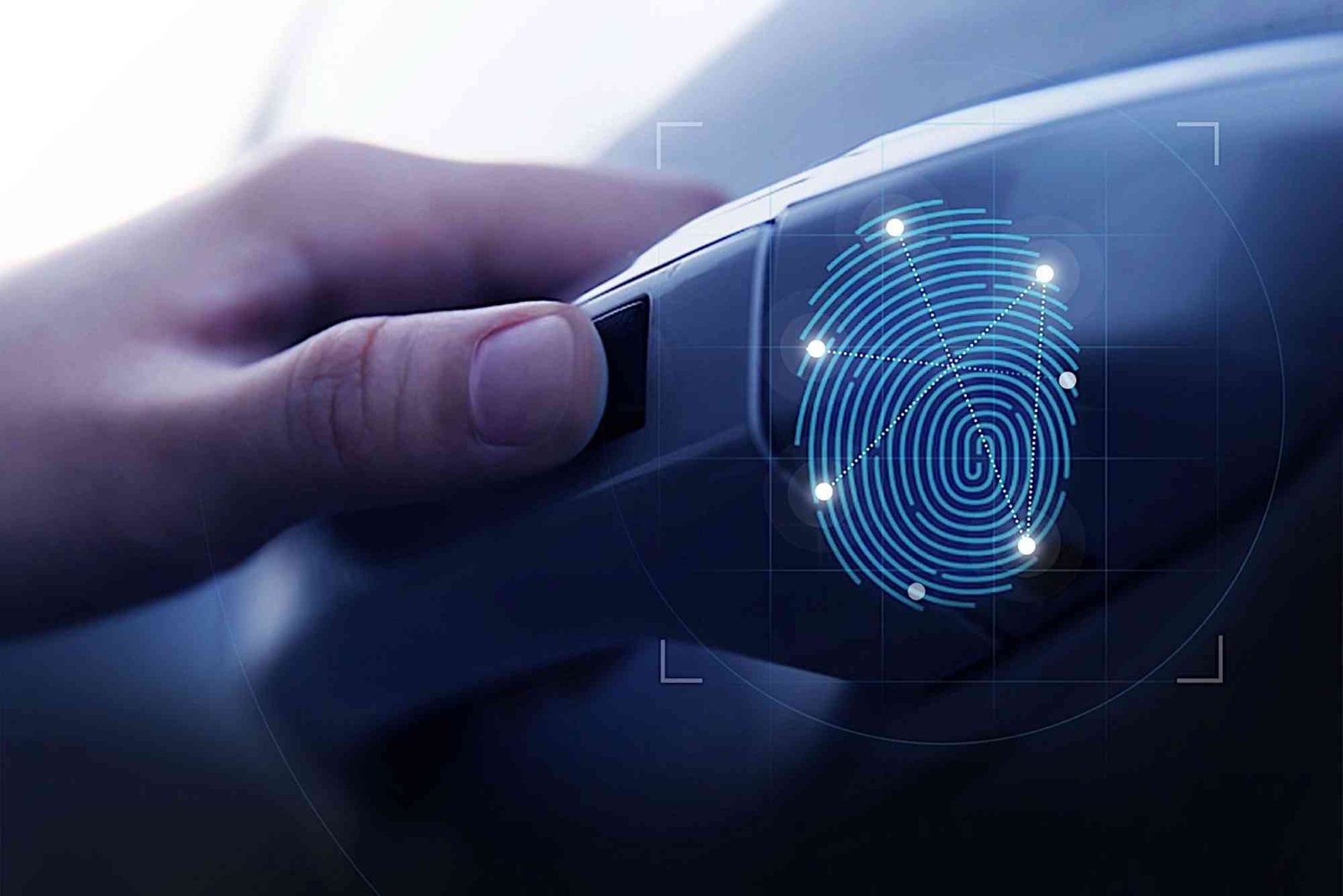
- Fingerprints
- Facial features
- Iris patterns
- Retina scans
- Palm geometry
These traits are hard to duplicate, making them strong identifiers.
Behavioral Biometrics
Behavioral biometrics analyze how you do something, rather than what you are. These include:
- Voice recognition
- Typing rhythm
- Gait analysis
- Touch pressure patterns
Behavioral traits can be subtle but highly personalized.
How Biometric Security Works
Understanding how biometric security works involves looking at the data capture, processing, and matching stages.
Data Enrollment
Before biometric security can function, your device must enroll your biometric data:
- The system captures your trait (e.g., fingerprint image).
- It extracts key features from the capture (e.g., ridge patterns).
- These features are converted into a template, a numerical representation stored securely — often encrypted.
During enrollment, multiple scans may be taken to ensure accuracy and consistency.
Matching and Verification
When you try to unlock your device:
- A fresh biometric sample is taken.
- This sample is compared to the stored template using matching algorithms.
- If the match score exceeds a threshold, access is granted.
This process happens in milliseconds on your device, not in the cloud, to protect your data.
Continuous Learning
Some systems adapt over time — especially behavioral biometric models. They refine their templates through repeated use, improving accuracy while still maintaining high security.
Core Technologies Behind Biometric Security
Biometric systems rely on advanced technologies working together seamlessly.
Sensors and Capture Hardware
Good biometric security starts with reliable sensors:
- Optical and capacitive fingerprint sensors detect patterns or electrical properties.
- Infrared and 3D cameras measure depth and facial geometry.
- Microphones and motion sensors capture behavioral traits.
Sensor quality directly impacts accuracy and resistance to spoofing.
Feature Extraction Algorithms
Raw data by itself isn’t enough. Algorithms identify distinctive, repeatable features such as:
- Minutiae points in a fingerprint
- Distance ratios between facial landmarks
- Frequency patterns in voice input
These features become the biometric templates used during matching.
Matching Algorithms and Thresholds
Modern systems use statistical and machine learning models to decide if two biometric samples are from the same person. A match threshold determines how strict or lenient comparisons should be. Too high a threshold can lead to false rejections; too low can cause false acceptances.
Secure Storage and Encryption
Biometric templates are often protected using encryption and kept in isolated secure environments such as:
- Secure Enclave (Apple)
- Trusted Execution Environment (Android/Windows)
- Hardware Security Modules (HSMs)
This practice ensures that even if your device is compromised, biometric data remains protected.
Common Uses of Biometric Security in Devices
Biometric security has gone mainstream because it offers convenience and strong protection. Below are common applications.
Smartphones and Tablets
Mobile devices were among the first consumer products to adopt biometrics widely:
- Fingerprint sensors for unlock and payments
- Facial recognition for secure access
- Voice authentication in virtual assistants
Biometric authentication increases convenience by reducing reliance on passwords.
Laptops and Computers
Modern laptops often include:
- Fingerprint readers in keyboards or power buttons
- IR cameras for facial login
- Biometric APIs in operating systems to secure applications
Businesses also use biometrics for employee authentication and secure login.
Smart Home and Wearables
Biometrics aren’t limited to phones and computers:
- Smart locks can use fingerprints or facial recognition
- Wearables detect heartbeat patterns or skin signals
- Security systems use voice recognition for access
Biometric security extends into daily life with increasing reach.
Advantages of Biometric Security
Biometric security is popular for several key reasons.
Higher Security than Passwords
Passwords are easily forgotten, guessed, or stolen. Biometrics are tied to your unique body features or behavior, making unauthorized access far more difficult.
Convenience and Speed
No more typing long passwords — a touch or glance can authenticate you in seconds.
Reduced Risk of Credential Theft
Since biometric templates aren’t reversible into raw data and are stored locally, they’re much harder to steal or replicate than passwords stored on servers.
Drawbacks and Challenges
Despite strong benefits, biometric security has limitations.
False Rejections and Acceptances
No system is perfect. You may sometimes be wrongly denied access or — in rare cases — granted access incorrectly. Manufacturers constantly tune thresholds to balance usability and security.
Privacy Concerns
Biometric data is deeply personal. Misuse or inadequate protection could lead to privacy violations. That’s why modern devices adopt secure storage and strict regulations.
Spoofing and Presentation Attacks
High‑end systems use liveness detection to counter attacks like fake fingerprints or photos. But attackers are persistent, and not all systems defend equally well.
How Modern Devices Protect Your Biometric Data
Security is only as strong as the protections around your data. Modern devices use layers of technology to safeguard your biometrics.
On‑Device Processing
Your biometric data is usually processed on your device instead of transmitted to servers. This limits exposure and reduces the risk of remote breaches.
Encryption and Sandboxing
Secure hardware compartments store templates encrypted, isolated from the main operating system and apps. Even if the device is compromised, these compartments are extremely hard to breach.
Multi‑Factor Integration
Biometrics may be combined with other factors (like device possession or passcodes) in high‑security scenarios, creating multi‑factor authentication that’s stronger than a single method alone.
Future Trends in Biometric Security
Biometric security continues to evolve as technology advances.
AI‑Enhanced Recognition
Machine learning models are improving accuracy, resistance to spoofing, and adaptability to changing user traits (e.g., facial hair changes).
Multimodal Biometrics
Systems that combine two or more biometric traits (e.g., face + voice) raise the bar for security and versatility.
Wearables and Behavioral Analytics
Wearable devices may continuously authenticate users based on heartbeat, gait, or touch patterns — enabling seamless and secure experiences.
Biometric security is transforming how we interact with technology by offering seamless, user‑centric protection that’s harder to compromise than traditional passwords or PINs. By leveraging unique physical and behavioral traits, modern devices authenticate users in seconds while balancing convenience with strong defenses.
FAQs
What is biometric security and how does it work?
Biometric security uses unique physical or behavioral traits (like fingerprints or facial features) to verify identity. Devices capture a biometric sample, convert it into a secure template, and compare it during authentication.
Are biometric systems more secure than passwords?
Generally, yes. Because biometric traits are unique to each individual and harder to duplicate, biometric security offers stronger authentication compared to static passwords.
Can biometric data be hacked or stolen?
While no system is perfectly immune, modern devices protect biometric templates with strong encryption and secure hardware, making theft extremely difficult relative to password databases.
Can biometric systems fail to recognize you?
Yes. Factors such as lighting conditions, physical injuries (e.g., a cut on a finger), or software limitations can lead to false rejections, though modern systems are improving continually.
What are common biometric technologies in smartphones?
Most smartphones today use fingerprint sensors, facial recognition cameras, and sometimes voice recognition to authenticate users quickly and securely.
How Technology Helps Fight Climate Change: Technology plays a vital role in combating climate change by enabling renewable energy solutions, improving energy efficiency, and monitoring environmental changes. Innovations like AI, smart grids, and carbon capture systems help reduce emissions and track progress toward a sustainable future.