
Introduction
Maintaining your car goes beyond just regular oil changes. One of the simplest yet most impactful maintenance tasks is replacing your car’s air filter. A clean air filter ensures your engine breathes properly, improving fuel efficiency, performance, and overall longevity. Many car owners overlook this small component, but neglecting it can lead to reduced engine power, higher fuel consumption, and potential engine damage. Fortunately, replacing your car’s air filter is a straightforward process that anyone can do at home, even without advanced mechanical skills.
In this guide, we’ll walk you through everything you need to know about how to replace your car’s air filter easily, including the tools required, step-by-step instructions, tips for different types of cars, and frequently asked questions from car owners.
Why Replacing Your Car’s Air Filter Matters
Improved Engine Performance
Over time, dirt, dust, and debris accumulate in your air filter. This restricts airflow to the engine, forcing it to work harder. A clean air filter allows optimal air intake, enhancing combustion efficiency and improving horsepower.
Better Fuel Efficiency
An engine that breathes better uses fuel more efficiently. Replacing a clogged air filter can increase your fuel economy by up to 10%, saving money over time and reducing environmental impact.
Longer Engine Life
Debris entering the engine can cause wear and tear on internal components. By keeping the air filter clean, you protect your engine from unnecessary strain and extend its lifespan.
Lower Emissions
A dirty air filter can lead to incomplete fuel combustion, increasing emissions. Replacing it helps your vehicle run cleaner, which is better for the environment.
Signs Your Car Needs a New Air Filter
Reduced Acceleration
If your car hesitates when you press the accelerator or struggles to reach normal speeds, a clogged air filter may be restricting airflow.
Unusual Engine Sounds
A clogged filter can cause your engine to make popping or coughing noises. These sounds indicate airflow issues that need attention.
Check Engine Light
Sometimes, a dirty air filter triggers sensors that illuminate the check engine light. While not always the cause, it’s worth inspecting the air filter first.
Dark, Dirty Filter
Visually inspecting your air filter is often the easiest method. If it looks black, dusty, or clogged, it’s time for a replacement.
Tools You’ll Need
Replacing a car air filter requires minimal tools, making it a perfect DIY task. You’ll need:
- A new air filter compatible with your vehicle
- Screwdriver or socket set (depending on your airbox design)
- Clean cloth or rag
- Gloves (optional, for keeping hands clean)
Having these tools ready ensures a smooth replacement process.
Guide to Replace Your Car’s Air Filter
Locate the Air Filter Housing
Most vehicles have a rectangular or cylindrical air filter housed in a plastic or metal box near the engine. Consult your owner’s manual if you’re unsure.
Open the Air Filter Housing
Use a screwdriver or release clips to open the housing. Be careful not to force anything, as plastic clips can break easily.
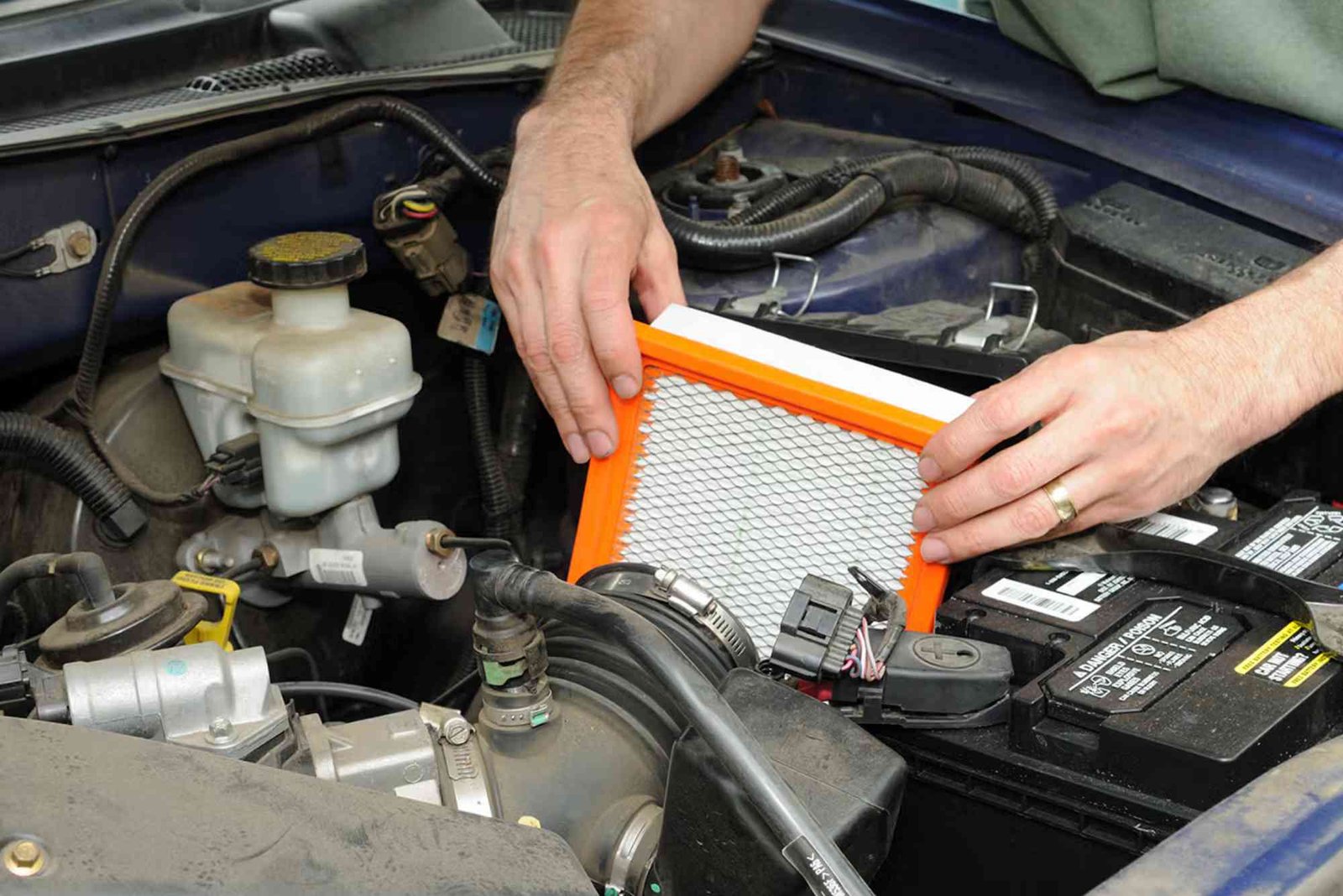
Remove the Old Air Filter
Take out the old air filter carefully. Note its orientation so you can install the new one correctly.
Clean the Air Filter Housing
Use a clean cloth or rag to wipe away any dust or debris inside the housing. A clean housing ensures maximum efficiency from the new filter.
Install the New Air Filter
Place the new air filter in the same orientation as the old one. Make sure it fits snugly without forcing it in.
Close the Air Filter Housing
Secure the housing cover with clips or screws. Double-check that it’s properly sealed to prevent unfiltered air from entering the engine.
Test Your Vehicle
Start your engine and ensure everything runs smoothly. You may notice improved acceleration and quieter engine operation immediately.
Tips for Different Types of Vehicles
For Sedans and Hatchbacks
Most compact cars have easy-to-access air filters located near the front of the engine bay. Replacement usually takes under 10 minutes.
For SUVs and Trucks
Larger vehicles may have filters in more complex housing. Take extra care with clips and bolts. Some trucks have dual filters that both require replacement.
For Diesel Engines
Diesel engines are more sensitive to airflow restrictions. Replace the air filter at recommended intervals to avoid reduced power and increased emissions.
For High-Performance Cars
Performance vehicles may use specialized air filters. Make sure to use the manufacturer-recommended type to maintain warranty coverage and engine efficiency.
How Often Should You Replace Your Air Filter?
The frequency depends on your vehicle and driving conditions:
- Typical Schedule: Every 12,000–15,000 miles (19,000–24,000 km)
- Dusty or Off-Road Conditions: Every 6,000–10,000 miles (9,500–16,000 km)
- Heavy City Driving: Consider checking every 10,000 miles (16,000 km)
Always consult your car’s owner manual for manufacturer-specific recommendations.
FAQs
How long does it take to replace a car air filter?
Replacing an air filter typically takes 10–15 minutes for most vehicles. Complex housings or dual filters may take slightly longer.
Can I drive with a dirty air filter?
While it’s possible, driving with a clogged air filter reduces performance, lowers fuel efficiency, and increases engine wear. Replacement is strongly recommended.
Do aftermarket filters work as well as OEM filters?
Aftermarket filters can perform well, but it’s important to choose one that matches your vehicle’s specifications. Some high-performance aftermarket filters offer better airflow but require maintenance.
How can I tell if my air filter is dirty without removing it?
Look for engine hesitation, reduced fuel efficiency, unusual noises, or the check engine light. Visual inspection remains the most reliable method.
Can a car air filter improve fuel economy immediately?
Yes. A clean air filter allows the engine to breathe efficiently, often resulting in noticeable improvements in fuel economy and engine responsiveness.
Replacing your car’s air filter is one of the easiest and most cost-effective ways to protect your engine, improve performance, and save on fuel. By following the simple steps outlined above, you can complete this maintenance task at home in minutes, without needing a mechanic. Regularly checking and replacing your air filter ensures your vehicle runs smoothly and lasts longer.
How to Reduce Noise Inside Your Car Cabin: Minimizing cabin noise makes driving more comfortable. Start by checking door and window seals for gaps, adding sound-deadening mats or foam under carpets, and using thicker floor mats. Regular maintenance of tires and engine mounts also helps. Small changes can drastically reduce road, wind, and engine noise for a quieter ride.